Common Mistakes When Ripening Bananas (and How to Avoid Them)
Bananas arrive in your kitchen with a timetable you can't see. One day they're firm enough to slice into porridge; two days later they're sweet and speckled; by the weekend they're dark and soft enough to bake with. That short window is why small storage decisions matter, and why the same few mistakes catch people out again and again. Almost all of them are easy to fix once you know what the fruit is actually doing.
Whether you prefer them just-yellow or deeply freckled, the trick is to control the pace rather than react to it. Here are the errors worth avoiding, roughly in the order they tend to happen.
Reaching for the fridge far too early
Bananas are a tropical fruit, and cold is unkind to them. Below roughly 13°C the skin suffers chilling injury and darkens within a day or two, often while the flesh inside is still perfectly good. The cold also stops ripening almost completely. Put a green banana in the fridge and you don't get a ripe banana later — you get a hard, greenish one with a black skin that ripens unevenly once it comes back to room temperature. The enzymes that convert starch to sugar simply don't work well in the cold, so the fruit can stay starchy and bland even after the peel turns black.
Wait until your bananas have reached the stage you actually want, then refrigerate them to hold that stage. Yellow with a few freckles will keep for three or four days. The skins will darken; that's expected. If you accidentally chill a green bunch, don't panic. Leave it at room temperature and it may still ripen, though the texture might be softer than usual — perfect for baking, less so for slicing over cereal.
A black banana skin in the fridge is not a spoiled banana. Judge by the flesh, not the peel.
Tearing the bunch apart badly
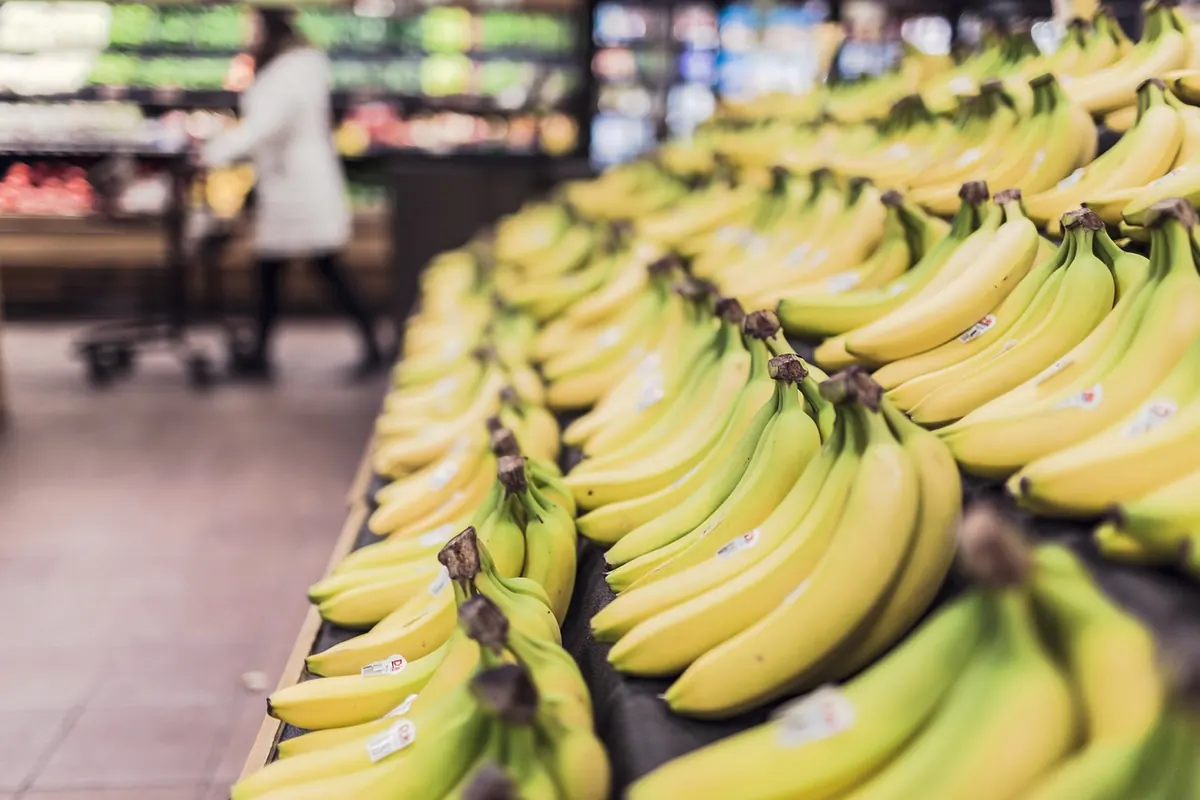
Bananas ripen as a cluster. The crown — the thick joined stem where the fingers meet — is a major source of ethylene, the gas that drives ripening, and when the bunch sits together that gas builds up in the space between the fruit. Left whole, a bunch ripens faster and more evenly. Split into singles, each banana ripens more slowly. Which you want depends on your week. If you bought a large bunch and can't eat them all in three days, separate a few to stretch the timeline.
The mistake is how people separate them. Ripping a banana off the bunch can tear a strip of peel down the side, and every tear is a wound that browns and then moulds. Cut cleanly through the crown with scissors, leaving a short stub attached to each finger. Don't crowd them into a tight bowl either — pressure bruises the peel, and bruises ripen first. A wide, shallow bowl or a hanging banana tree is better than a deep fruit bowl where they're stacked on top of each other.
Parking them in direct sunlight
Warmth speeds ripening, so a sunny windowsill looks like a shortcut. It isn't. Direct sun heats the fruit unevenly: the side facing the glass can be several degrees warmer than the shaded side, so one patch softens while the rest catches up. The result is sunken dark patches, split skins and fruit flies. I once left a bunch on a south-facing sill for an afternoon and came back to bananas that looked like they'd been roasted on one side — soft, weeping, and already attracting gnats.
Rapid heat also pushes the peel ahead of the flesh. Bananas turn yellow before the starch inside has converted to sugar, so they look ready and taste bland. Keep the bowl out of direct sun and away from radiators, the hob and the top of the fridge. Ordinary room temperature, somewhere around 18–20°C, ripens bananas steadily and predictably. Below about 13°C, ripening stalls.
Sealing them inside plastic
Plastic bags and airtight containers are the enemy of good bananas. They trap ethylene gas, which builds up and accelerates ripening far beyond what you want. They also trap moisture, which creates a humid microclimate perfect for mould. A banana sealed in a plastic bag can go from yellow to black and fuzzy in a single day. If you want to slow ripening, leave them open to the air. If you want to speed it up, use a paper bag — it holds some ethylene close to the fruit but lets excess moisture escape. A paper bag with an apple or a ripe banana inside is a classic ripening chamber for avocados and green tomatoes, and it works for bananas too.
A paper bag is a tool; a plastic bag is a trap.
Storing them next to other ripening fruit
Bananas are both ethylene producers and ethylene sensitive. Apples, avocados, tomatoes, peppers, melons and stone fruit all release ethylene as they ripen. If you pile bananas next to any of these in a fruit bowl, everyone ripens faster — sometimes much faster. That's useful if you're trying to ripen a hard avocado, but it's a disaster if you want your bananas to last the week. Keep bananas separate from other ethylene-producing produce, and away from leafy greens, which can turn yellow and bitter when exposed to the gas.
A simple rule: give bananas their own space. A bowl on the counter away from the fruit basket is ideal. If you must store them together, use the paper-bag trick only for the fruit you want to ripen quickly, and move ripe items to the fridge as soon as they're ready.
Throwing away overripe bananas
Those black, squishy bananas you're tempted to bin are actually the most useful stage of all. Overripe bananas are sweeter and softer, which makes them perfect for baking. Banana bread, muffins, pancakes and smoothies all benefit from fruit that's past its eating prime. The peel may look alarming, but the flesh inside is usually fine — and if there's a spot of mould on the peel, just cut it away.
To save them, peel the bananas, mash them lightly, and freeze in small portions. You can also freeze them whole, peeled, in a freezer bag. For smoothies, cut into chunks first and freeze on a tray before bagging so they don't clump together. A frozen banana whizzed with cocoa and milk makes a thick, soft-serve-style dessert. Don't let a good banana go to waste just because the skin turned black.
The bottom line
Ripening bananas is mostly about managing three things: temperature, ethylene gas and physical damage. Keep them at room temperature, avoid the fridge until they're ready, separate the bunch cleanly if you need to slow them down, and never seal them in plastic. Use a paper bag to speed things up, and keep them away from other ripening fruit. And when they finally go dark, don't throw them out — bake something.
Here's a quick checklist for the next bunch:
- Room temperature is your default — around 18–20°C.
- Fridge only when ripe — yellow with freckles, then chill to hold.
- Cut, don't tear — separate the crown cleanly with scissors.
- Skip the plastic — use a paper bag to speed ripening, open air to slow it.
- Keep them separate from apples, avocados and other ethylene producers.
- Freeze the overripe ones — peel, mash or chunk, and save for baking.
Treat bananas like the tropical fruit they are: warm, dry, and undisturbed. They'll reward you with a perfect window of sweetness.
Photo: ClickerHappy / Pixabay