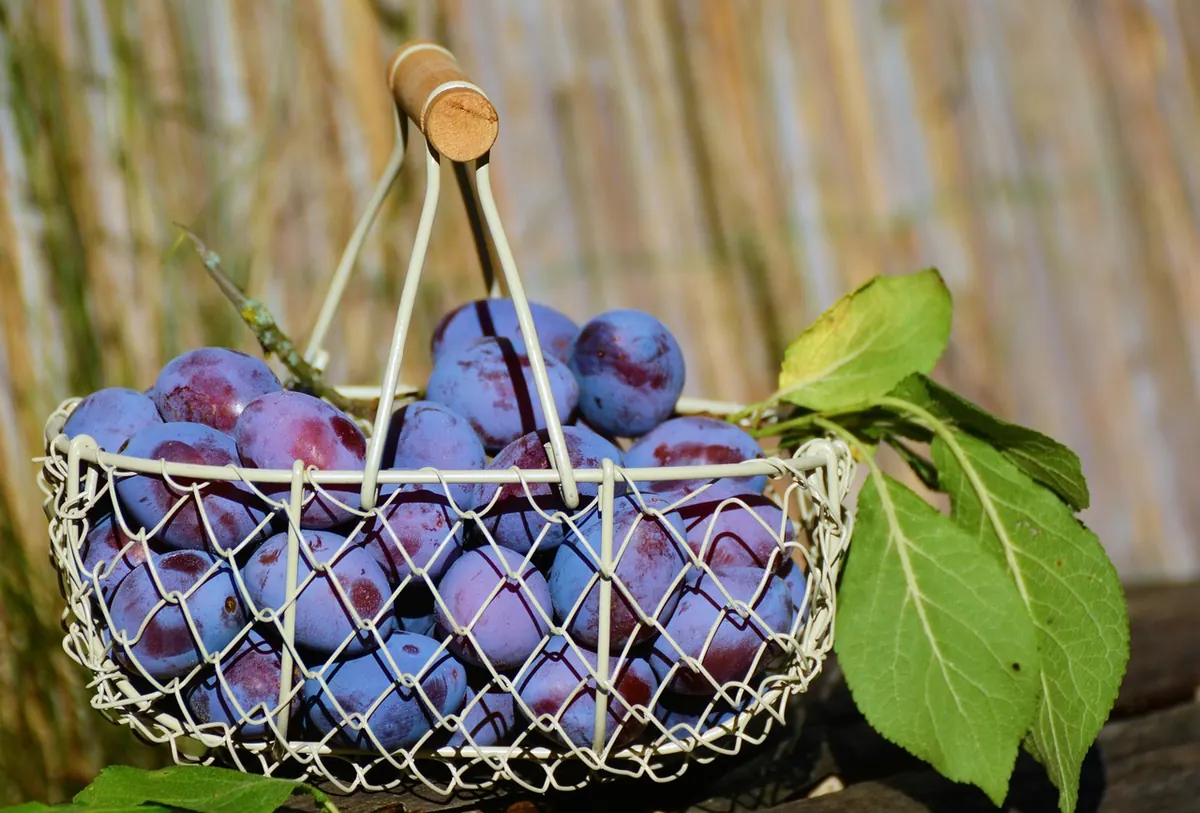
Two gardens twenty miles apart will not ripen a Victoria plum on the same weekend. A sheltered south-facing wall in a warm coastal town can bring a fig on a fortnight before a cold clay plot on higher ground, and a grey, wet August will push most things back. Treat the months below as the order to expect rather than a set of dates to obey. The fruit itself — its colour, its scent, the way it lets go of the branch — is the only honest signal. Here is what tends to be ready when across the UK, and how to tell that the moment has actually arrived.
Why the UK Ripening Calendar Moves Every Year
Ripening runs on warmth and sunlight, not on the date. Sugar accumulates in the weeks before harvest, so a long, bright July can bring an orchard forward by a fortnight, while a cool, cloudy August leaves plums hanging into September. Latitude matters too: Kent and Cornwall run two or three weeks ahead of Yorkshire and the Scottish Borders for the same variety.
Then there is everything you control. Early varieties such as the apple 'Discovery' or the strawberry 'Honeoye' will always beat late ones. A tree against a sunny wall ripens faster than one in the open, and a container plant, with warmer roots, often beats one in the ground. Thinning a heavy crop in early summer helps what is left swell and sweeten.
One useful rule: very little improves after picking. Only pears, quince, medlars and late keeping apples genuinely ripen further in store. Leave the rest on the plant until they are ready.
Late Winter and Spring: Forced Rhubarb and Early Strawberries
The UK fruit year opens indoors. Forced rhubarb, grown in darkened sheds, is pulled from January to March, and outdoor rhubarb follows, best taken between April and early July. Pull the stalks rather than cutting them, and stop by midsummer so the plant can rebuild.
Elsewhere, spring is a holding pattern. Buds swell, canes push, blossom opens, and the work is preparation: netting fruit bushes before the birds notice them, thinning plums and apples once the June drop has passed, and keeping pots watered. Under glass or a polytunnel, early strawberries can be ready from late May, roughly a fortnight before anything outdoors.
Early Summer: June and July
This is soft fruit season, and it is generous. Strawberries arrive first and peak through late June into early July; 'Cambridge Favourite' and 'Marshmello' are reliable outdoor choices, while 'Albion' and 'Elsanta' crop heavily under cover. Pick them in the cool of the morning, when the scent is strongest and the fruit is firm.
Cherries follow close behind, though the birds usually get there first. 'Stella' is self-fertile and a good garden choice, ripening from late June in the south and a fortnight later in the north. Gooseberries are ready from early June for cooking and late June for eating fresh; 'Hinnonmaki Red' is sweet enough to pick and eat on the spot. Blackcurrants darken and soften through July, and raspberries — summer-fruiting types such as 'Glen Ample' — start in late June and carry on for a month or more if you keep picking.
Blueberries, increasingly happy in UK gardens with ericaceous compost, ripen from July. They do not all ripen at once, so pick individually over several weeks. Tayberries, loganberries and other hybrid berries also come in now, and a wet June can make them mouldy quickly, so check daily.
High Summer: July and August
By mid-July the stone fruit takes over. Plums are the backbone of the UK fruit garden: 'Victoria' is the classic, ready from early August in the south, and 'Opal' or 'Czar' come a little earlier. A plum is ready when it comes away with a gentle twist and the skin has a dusty bloom. If it needs a tug, leave it.
Apricots and peaches are more marginal, but against a sunny wall they can crop well. 'Avalon Pride' peach is worth trying in a sheltered spot. Figs are the great surprise of a warm UK summer: 'Brown Turkey' can produce two crops, the first in July on last year's wood and the second in September. The second is usually the better one.
Early apples start in late July and August. 'Discovery' is the benchmark, with its red flush and sharp, juicy flesh. 'Beauty of Bath' and 'George Cave' are other early varieties. Eat them quickly — they do not keep. Blackberries run from late July into September, and wild ones often taste better than cultivated. Pick them when they are dull black and fall into your hand.
Autumn: September and October
Autumn is the main apple and pear season. 'Cox's Orange Pippin' is ready from late September, and 'Egremont Russet' from early October. Pears are tricksy: pick them when they part easily from the branch but before they soften, then ripen them indoors for a week or two. 'Conference' and 'Concorde' are the reliable garden varieties.
Quince ripens in October, turning from green to gold and filling the kitchen with perfume. They are hard and astringent raw, but make superb jelly and membrillo. Medlars are ready after the first frosts, or you can blett them indoors — let them go brown and soft, then scoop out the flesh.
Grapes outdoors are a gamble, but in a warm year 'Boskoop Glory' can ripen under glass or against a wall. Autumn raspberries, such as 'Joan J' or 'Polka', start in August and crop until the first hard frost. They are easier than summer types because you cut all the canes down in winter.
Late Autumn and Winter: Stored Fruit and Sloes
By November the fresh harvest is mostly over, but the store cupboard takes over. Late apples such as 'Bramley' and 'Ashmead's Kernel' will keep for months in a cool, dark, frost-free place. Check them regularly and remove any that are going soft.
Sloes are ready after the first frosts, usually in November. They are too sour to eat raw but make excellent gin and jelly. Rosehips and crab apples also hang on into winter, and they are worth picking for jellies and syrups. If you have a cold frame or unheated greenhouse, you can also lift and store root vegetables, but that is another calendar.
How to Tell When Fruit Is Ripe
Colour is the first clue, but it is not the whole story. A ripe fruit often develops a deeper, richer colour and a slight bloom. Scent is the next test: a ripe strawberry or plum smells sweet and perfumed, while an unripe one smells green. Finally, the stem test: a ripe fruit will come away with a gentle twist or a light lift, leaving the stalk behind. If you have to pull hard, it is not ready.
For trees, look for the "June drop" in early summer, when the tree naturally sheds some small fruits. After that, thin the remaining fruit to one every four to six inches so they have room to swell. For soft fruit, pick every day or two in warm weather, and do not leave overripe fruit on the plant — it invites pests and disease.
What to Do With a Glut
Even a modest fruit garden can overwhelm you in a good year. Freeze soft fruit in a single layer on a tray before bagging, so it does not clump. Stew apples and pears with a little sugar and freeze in portions. Make jam, chutney or fruit leather. Swap with neighbours. And remember that a few birds and wasps will always get their share — plant enough to share, and net only what you really need.
A Month-by-Month Quick Reference
- January–March: forced rhubarb (indoors); outdoor rhubarb from April.
- May–June: early strawberries under cover; gooseberries for cooking; cherries from late June.
- July: strawberries, raspberries, blackcurrants, blueberries, gooseberries, early cherries, apricots, early plums, figs (first crop).
- August: plums, peaches, early apples, blackberries, blueberries, summer raspberries, figs (second crop starting).
- September: maincrop apples, pears, blackberries, autumn raspberries, grapes (if warm), quince.
- October: late apples, pears, quince, medlars, autumn raspberries.
- November–December: sloes, rosehips, stored apples and pears.
The calendar is a guide, not a rulebook. Walk your garden every few days, taste as you go, and let the fruit tell you when it is ready. That is the real harvest skill, and it is one you can only learn on your own plot.
Photo: congerdesign / Pixabay