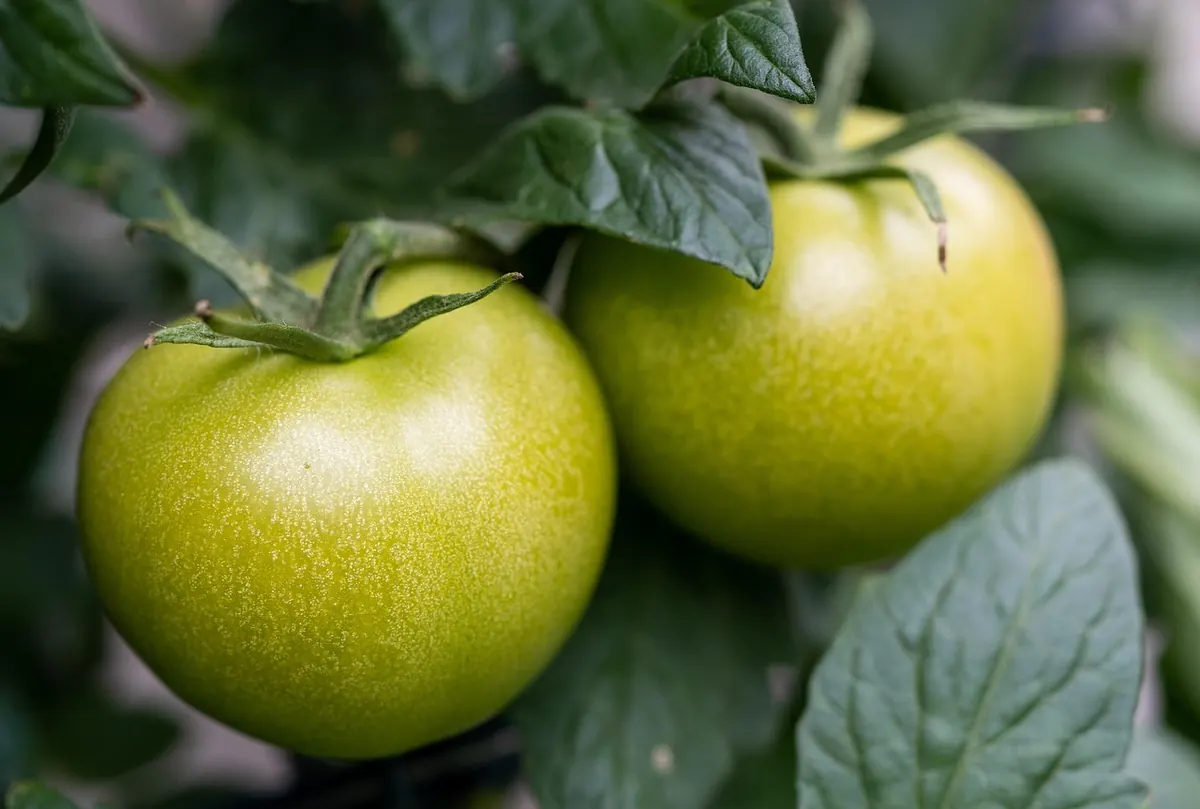
There is no need to lose the last of the crop to the first cold night. Green tomatoes picked before the frost will carry on ripening indoors, often for weeks at a stretch, and the ones that refuse to colour still earn their place in the kitchen. The trick is to harvest in good time, sort the fruit honestly, and give it somewhere dry, airy and reasonably warm to sit. Then check on it often enough that one soft tomato does not take the whole tray down with it.
Harvest Before the Frost, Not After
Frost is the point of no return. A tomato that freezes on the vine turns watery and soft, and it will not store or ripen properly afterwards. So when the forecast starts mentioning a cold night, clear the plants rather than gambling on one more week of sunshine.
Work through the crop in order of promise: anything showing colour first, then the full-sized green fruit, then the small hard ones. Twist or snip each tomato off with a short piece of stalk — about a centimetre is plenty — and leave the green calyx in place. Long, spiky stalks puncture the fruit next to them in the box, and a punctured tomato is a rotting tomato.
Handle them as you would eggs. Bruises do not show immediately; they appear a fortnight later as a brown patch spreading across the shoulder. Pick into a shallow crate or cardboard box rather than a deep bag, and never tip a full trug into a bucket.
In a greenhouse or a sheltered yard you can sometimes leave the plants a little longer, and the old method of lifting the whole plant and hanging it upside down in a shed does work. Trays give you far more control, though, because you can see and sort every single fruit.
Sort the Crop Into Three Piles
Sorting is the most useful thing you will do. Ripening depends on how mature the fruit was when it came off the vine, not on how long you are prepared to wait.
- Nearly there: full-sized and dark green, with a hint of yellow, pink or orange at the blossom end. Days away from ripe, and they carry on as if nothing happened.
- Mature green: solid, glossy and full-sized, with no colour at all. Reliable, if slower — expect one to three weeks indoors.
- Immature: pale, dull and undersized, often with a woody core when you cut one open. Most will wrinkle before they ever turn red. Cook them.
Set aside anything with a split, a soft patch, a hole or a speck of mould. Those go straight to the kitchen or the compost; they will not improve, and one mouldy fruit will spoil the ones touching it.
Set Up Your Ripening Trays
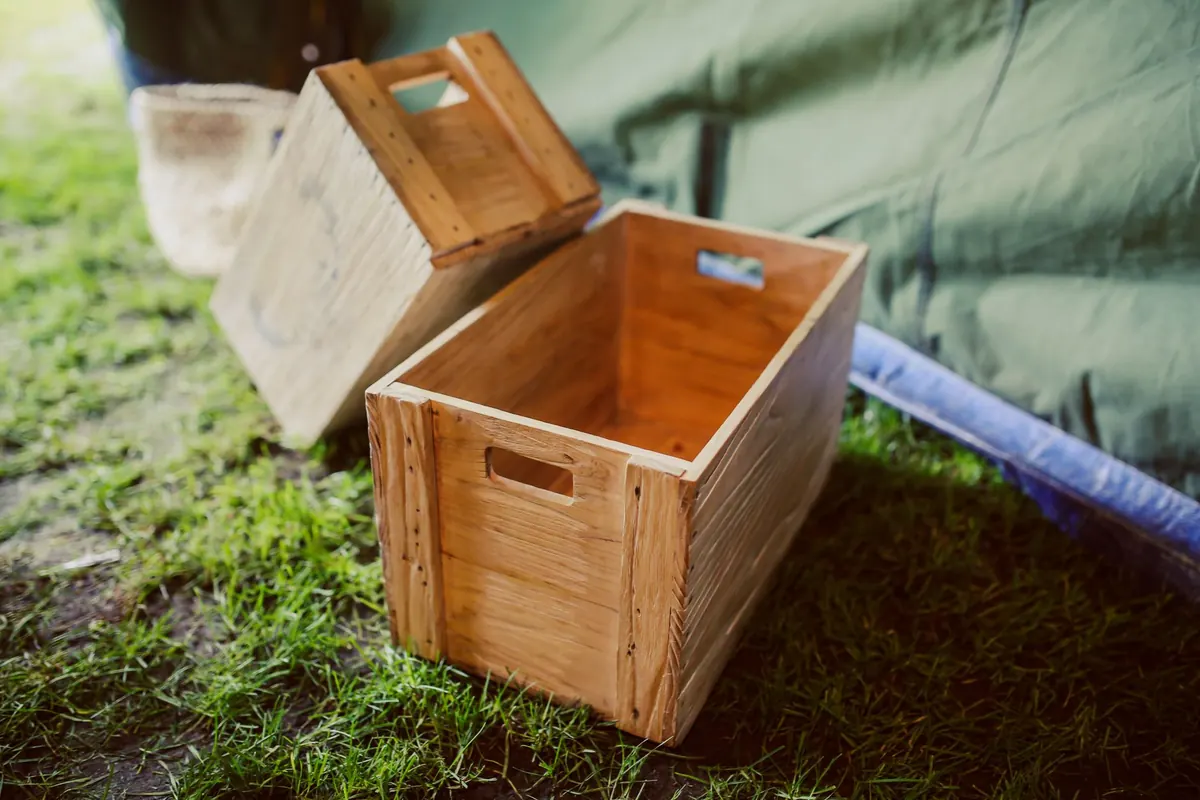
A shallow cardboard box, a baking tray, a wooden crate or an old drawer all do the same job: they hold the fruit in one layer and let air move around it.
- Line the tray with newspaper or kitchen paper. It soaks up any leakage and stops the fruit sitting in its own moisture.
- Lay the tomatoes in a single layer, shoulder to shoulder but not touching, with a little space between each one.
- Cover loosely with another sheet of newspaper or a clean tea towel. This slows moisture loss without sealing the fruit in.
- Put the tray somewhere out of direct sunlight — a spare room, a cool kitchen corner, the top of a cupboard. Airflow matters more than darkness.
Avoid plastic bags, sealed tubs and stacked boxes. Trapped moisture is what turns a promising tray into a tray of mouldy fruit. And if your only space is a cold garage or shed, bring the fruit indoors; low temperatures slow ripening to a standstill and can spoil the texture for good.
Use Ethylene, but Keep It Sensible
Ripe fruit gives off ethylene, a natural plant hormone that nudges its neighbours along. An apple, a ripe pear or a banana in the tray genuinely does speed things up, which is useful when you want a few tomatoes for the weekend.
The same effect makes it easy to overdo. A banana left until it is black adds mould and fruit flies to the equation. For small batches, drop two or three tomatoes and one ripe apple into a paper bag, fold the top over and check it daily. For trays, put a single apple at one end, take it out once the first fruit colours, and leave the rest to their own devices.
Temperature, Light and the Waiting Game
Ripening moves quickest somewhere around 18–21°C. A warm kitchen worktop works; a chilly utility room does not. If the trays start ripening faster than you can eat them, move some to a cooler room to stagger the flow.
Check every day or two. Lift each tomato briefly, remove anything that has coloured, and bin anything that feels soft or shows a wet spot. Ripe fruit left sitting only invites the next one to follow.
A tray of green tomatoes is not a race. Handled well, it becomes a rolling harvest that can stretch from the first frost into December.
Cherry tomatoes colour fastest, often within a week of picking. Big beefsteaks can take a fortnight or more. If you want to use a batch all at once — for a sauce or a chutney — gather fruit at the same stage of colour and keep them together.
Green Tomatoes That Refuse to Colour
Some will never turn. That is normal, and it is not a failure. Green tomatoes have a firm texture and a sharp, acidic edge that works beautifully in the kitchen: sliced thick, dusted in cornmeal or flour and fried; chopped into a chutney with onions, ginger and vinegar; cooked down into a green tomato ketchup; or roasted in wedges with oil, garlic and a pinch of sugar to balance the tartness. Smaller ones pickle well whole.
If you are preserving, follow a tested recipe and sterilise your jars properly rather than improvising quantities. Discard any fruit with mould or soft rot rather than cutting around it.
The Practical Round-Up
Pick before the frost, keep the fruit dry, and sort it often. Single-layer trays, newspaper to catch drips, 18–21°C, one apple for a gentle push and a daily look for anything going soft. Ripening happens roughly in the order the fruit was picked, so eat from the top of the tray and let the rest follow. Whatever still sits green at the end of the year is not waste; it is dinner.
Photo: WagnerAnne / Pixabay